Sunscreen: how to apply and reapply it, even over makeup
It is the most important step in any skin care routine. Here is why, how to apply it properly and how to reapply it during the day without ruining your makeup.
 Photo coming soonSunscreen: how to apply and reapply it, even over makeup
We say it at every consultation: no treatment gives its best results if the skin is not protected from the sun. Daily sunscreen is the simplest and most scientifically supported way to care for your skin, as long as you apply enough of it and reapply it during the day.
Why it matters so much
It lowers the risk of skin cancer. In a clinical trial in Nambour, Australia, with 1,621 adults, those who used sunscreen daily had significantly fewer squamous cell carcinomas and, at the ten-year follow-up, half as many new melanomas (11 versus 22).
It is the main anti-aging measure. Ultraviolet radiation is estimated to be responsible for about 80% of visible signs of facial aging. In another study with 903 adults, those who used sunscreen daily showed no detectable increase in skin aging over four and a half years.
It prevents dark spots. Ultraviolet radiation and visible light stimulate melanin production. In patients with melasma, tinted sunscreens containing iron oxides gave better results than those that only filter ultraviolet radiation.
In Medellín, it is even more necessary. We are close to the equator, where radiation is high all year round, and at altitude: according to the WHO, radiation increases by about 10% for every 1,000 meters.
How to apply it properly
- Choose a broad-spectrum sunscreen (UVA and UVB) with SPF 30 or higher.
- Use at least one teaspoon for your face, neck and ears: roughly enough to cover the length of your index and middle fingers.
- Apply it as the last step of your skin care routine, before makeup.
- Do it about 15 to 30 minutes before going outside.
- Don’t forget your ears, neck, chest and the backs of your hands.
- Use it every day, even when it is cloudy.
Reapplying: the step most people forget
Protection does not last all day. Sweat, skin oil, friction and water gradually remove it. That is why sunscreen should be reapplied every two hours when you are in the sun, and always after swimming, sweating or towel drying.
Makeup with SPF helps, but it does not replace sunscreen: it is usually applied in a much smaller amount than needed to reach the protection shown on the label.
How to reapply over makeup
First, remove excess oil with blotting paper, pressing gently without dragging. Then dab on the sunscreen, without rubbing, so your makeup stays in place.
Today there are formats designed for touching up during the day. ISDIN, for example, offers these options:
- Tinted fluid · Fusion Water Magic Repair Color SPF 50. An ultra-light, water-based texture with color that evens out skin tone. Use it as a base in the morning and dab it on to touch up during the day.
- Compact powder · Fotoprotector ISDIN Compact SPF 50. 100% mineral filters, a matte finish and a sponge included. It comes in several shades and is easy to carry in your bag.
- Mineral powder brush · UV Mineral Brush SPF 50+. A colorless powder with mineral filters and a mattifying effect. Brush it over your makeup in seconds.
- Stick · Invisible Stick SPF 50. An invisible, shine-free finish that works with makeup. Ideal for touching up without getting your hands dirty.
- Mist · Facial Mist SPF 50, ISDIN’s new launch. An ultra-fine, invisible and refreshing mist with high protection against UVA, UVB radiation and blue light. It hydrates thanks to its 5-H complex and vitamin E, leaves a dry-touch finish and can be sprayed over makeup without disturbing it, with no need to touch or spread the product. Shake it, close your eyes and mouth, and spray it generously over your face and neck from at least 15 cm away.
Powders, sticks and mists are ideal for touch-ups, but they do not replace the generous layer of sunscreen you apply in the morning. Product availability may vary in Colombia.
Don’t forget your body
The sun also ages the skin on your body. Your neck, chest, arms and the backs of your hands get sun almost every day, and they often show dark spots, fine lines and loss of firmness. Skin cancer can also appear in areas we don’t always protect, such as the back or legs.
Apply sunscreen to all exposed skin: to cover the body, an adult needs about 30 ml, roughly a shot glass. Reapply every two hours and after swimming or sweating.
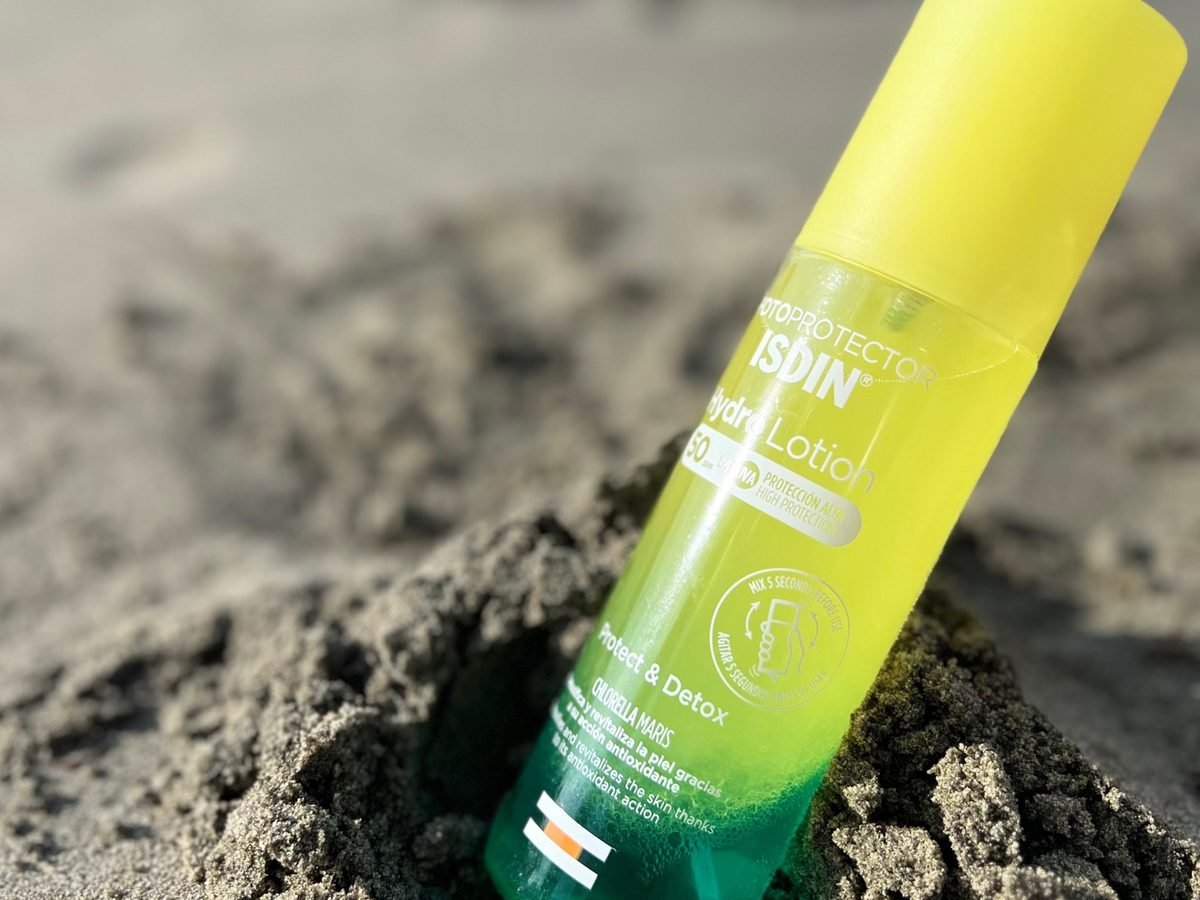
One example is Fotoprotector ISDIN Hydro Lotion SPF 50, a quick-drying two-phase lotion with Chlorella maris, a natural antioxidant. Shake it for 5 seconds before each use to mix both phases. It is for the body only: on your face, use a facial sunscreen.
Which one is best for you?
It depends on your skin type and your routine. If you have oily skin, matte finishes are usually more comfortable; if you are prone to dark spots or melasma, a tinted sunscreen is a good choice; if your skin is sensitive, mineral filters are usually better tolerated; and if you exercise or swim, look for a water-resistant one.
During your consultation, the doctor reviews your skin and recommends the best combination for you. Sunscreen also helps maintain the results of procedures such as peels, nanopore or CO2 laser. Read more in our article When is the best time to have an aesthetic treatment?
Quick checklist
- SPF 30 or higher, broad spectrum.
- One teaspoon for your face, neck and ears.
- Last step of your routine, before makeup.
- Reapply every two hours in the sun, and after swimming or sweating.
- Over makeup: mist, powder, stick or tinted fluid.
- On your body: about 30 ml for all exposed skin.
Sources
- Green AC, Williams GM, Logan V, Strutton GM. Reduced melanoma after regular sunscreen use: randomized trial follow-up. J Clin Oncol. 2011;29(3):257-63. pubmed.ncbi.nlm.nih.gov
- Green A, Williams G, Neale R, et al. Daily sunscreen application and betacarotene supplementation in prevention of basal-cell and squamous-cell carcinomas of the skin: a randomised controlled trial. Lancet. 1999;354(9180):723-9. pubmed.ncbi.nlm.nih.gov
- Hughes MCB, Williams GM, Baker P, Green AC. Sunscreen and prevention of skin aging: a randomized trial. Ann Intern Med. 2013;158(11):781-90. pubmed.ncbi.nlm.nih.gov
- Flament F, Bazin R, Laquieze S, et al. Effect of the sun on visible clinical signs of aging in Caucasian skin. Clin Cosmet Investig Dermatol. 2013;6:221-32. doi.org
- Castanedo-Cazares JP, Hernandez-Blanco D, Carlos-Ortega B, et al. Near-visible light and UV photoprotection in the treatment of melasma: a double-blind randomized trial. Photodermatol Photoimmunol Photomed. 2014;30(1):35-42. pubmed.ncbi.nlm.nih.gov
- Organización Mundial de la Salud. Global Solar UV Index: a practical guide. 2002. webarchive.library.unt.edu
- American Academy of Dermatology. How to apply sunscreen. www.aad.org
- Cancer Council NSW. 8 tips to make sure you are applying sunscreen correctly. www.cancercouncil.com.au
- ISDIN. Cómo reaplicar protector solar sobre maquillaje. www.isdin.com
- ISDIN. Facial Mist SPF 50: la nueva bruma facial que convierte la reaplicación en ritual. www.isdin.com
- ISDIN Colombia. Fotoprotector Hydro Lotion SPF 50. www.isdin.com
- ISDIN. Fotoprotector UV Mineral Brush SPF 50+. www.isdin.com
This article is for information only and does not replace a medical consultation. The products mentioned are examples; the doctor will tell you which one suits your skin. Results vary from patient to patient.
Related treatments
Photo coming soonPeel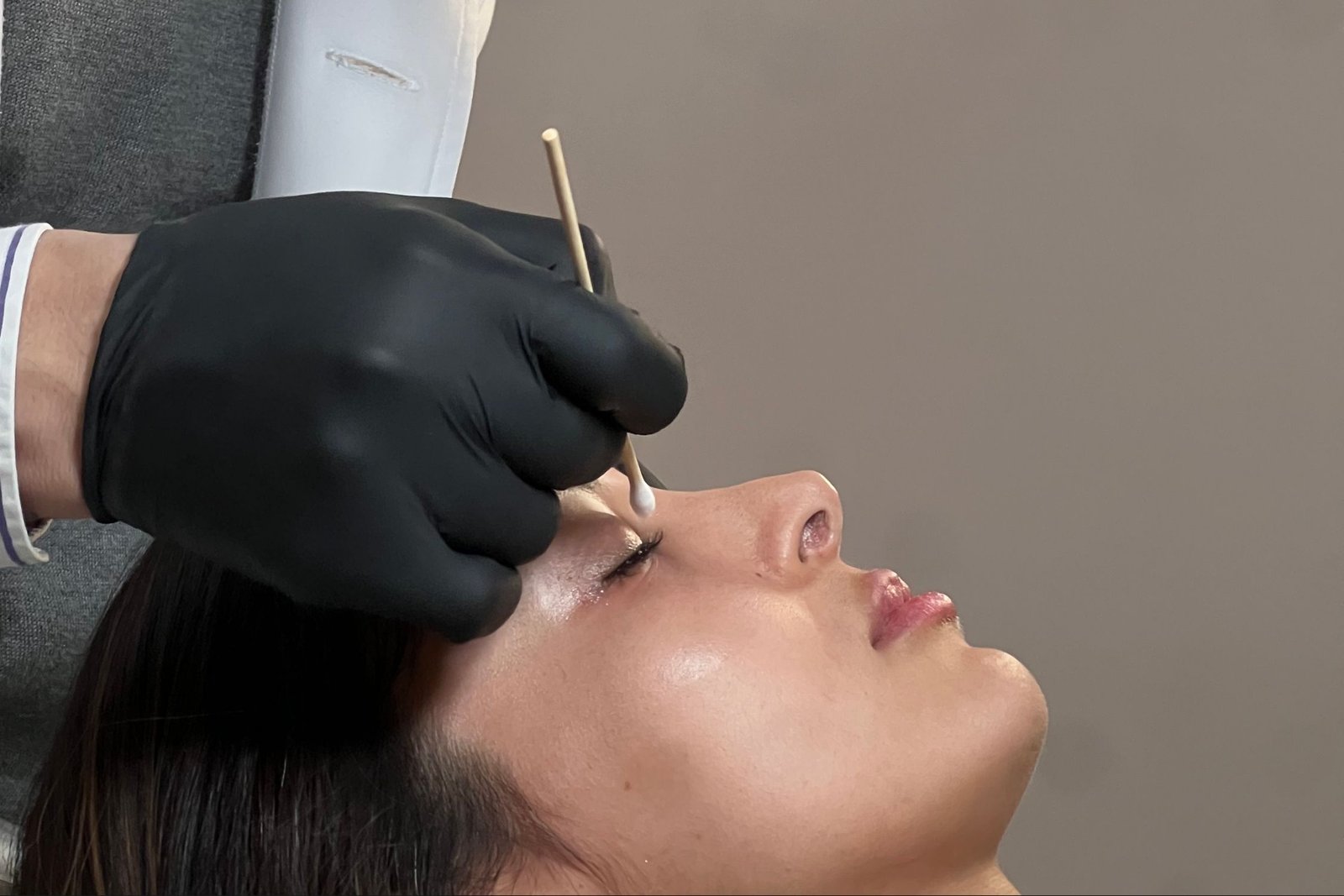
Peel
Chemical products that remove dead cells and promote cell regeneration.
Learn morePhoto coming soonNanopore
Nanopore
Microneedles and active ingredients tailored to your skin.
Learn morePhoto coming soonCO2 laser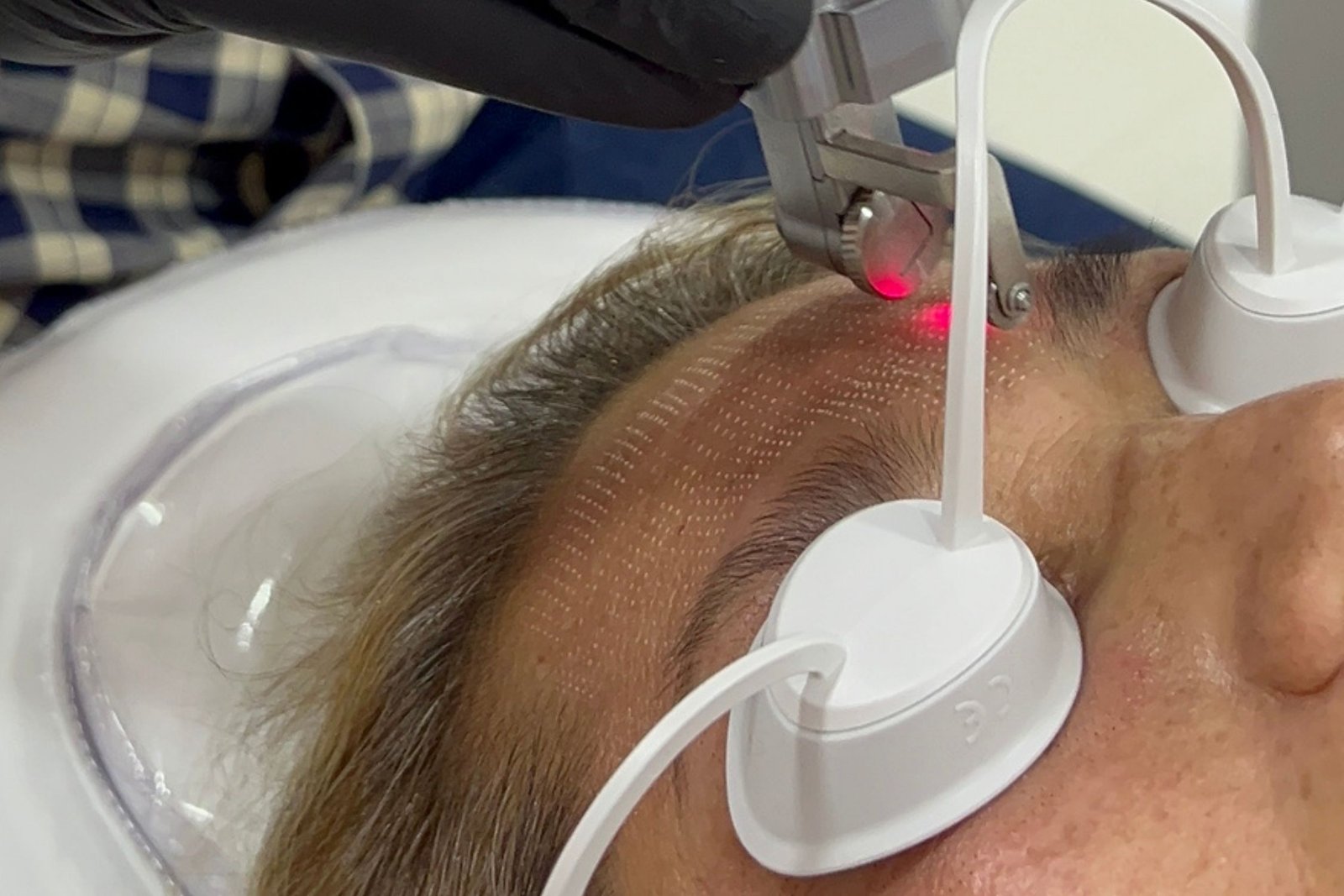
CO2 laser
A treatment for skin affected by the passage of time.
Learn more
Get news and skincare tips
Subscribe to our newsletter. We will have a special treat for you on your birthday.